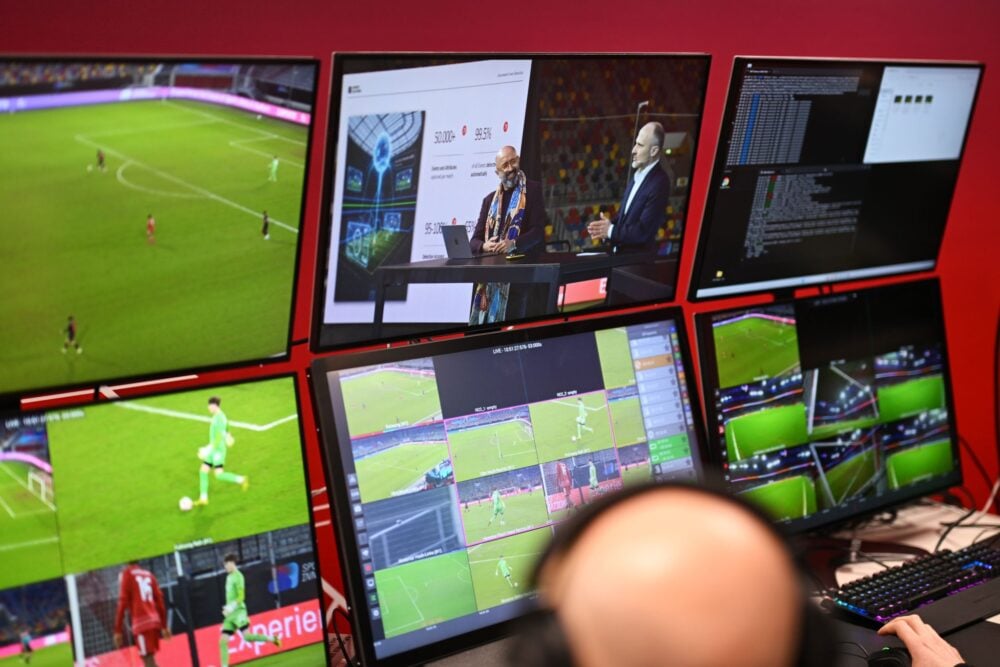
Building Purpose-Built Sports Broadcast Workflows
At Sports Innovation 2026, a consistent theme across the exhibition floor was how live sports production continues to evolve, balancing the need for greater creative coverage with the realities of established broadcast workflows and engineering constraints.
You can watch the video showing the integration below.
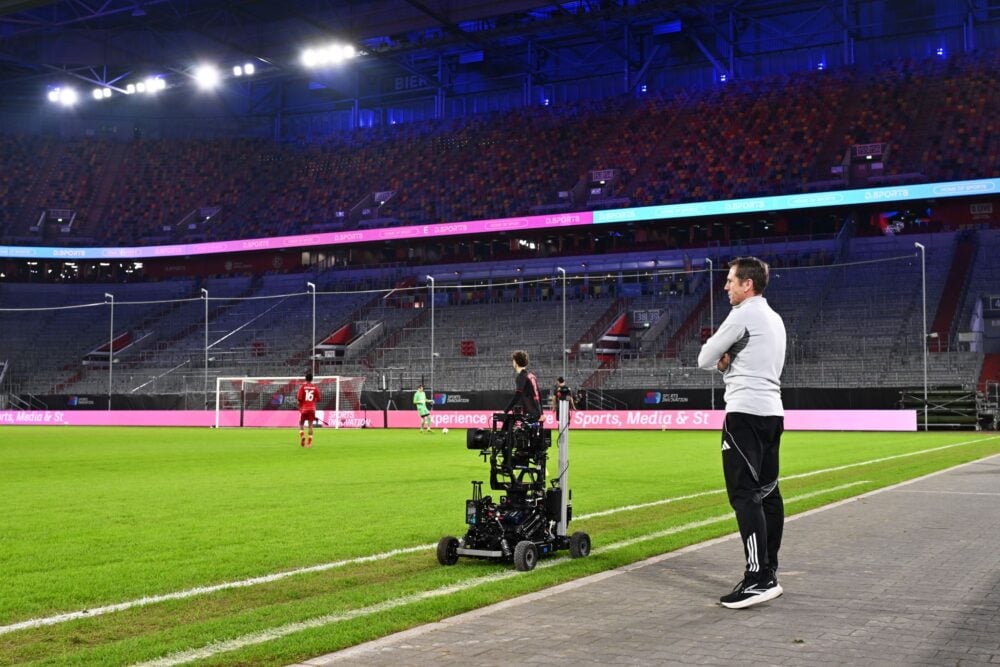
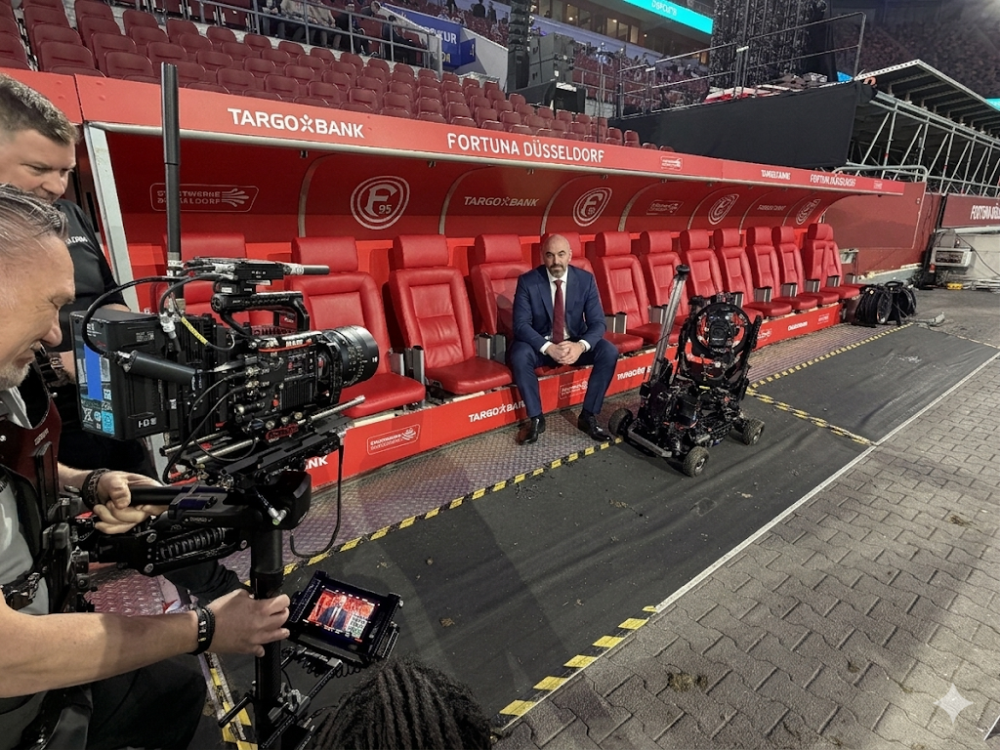
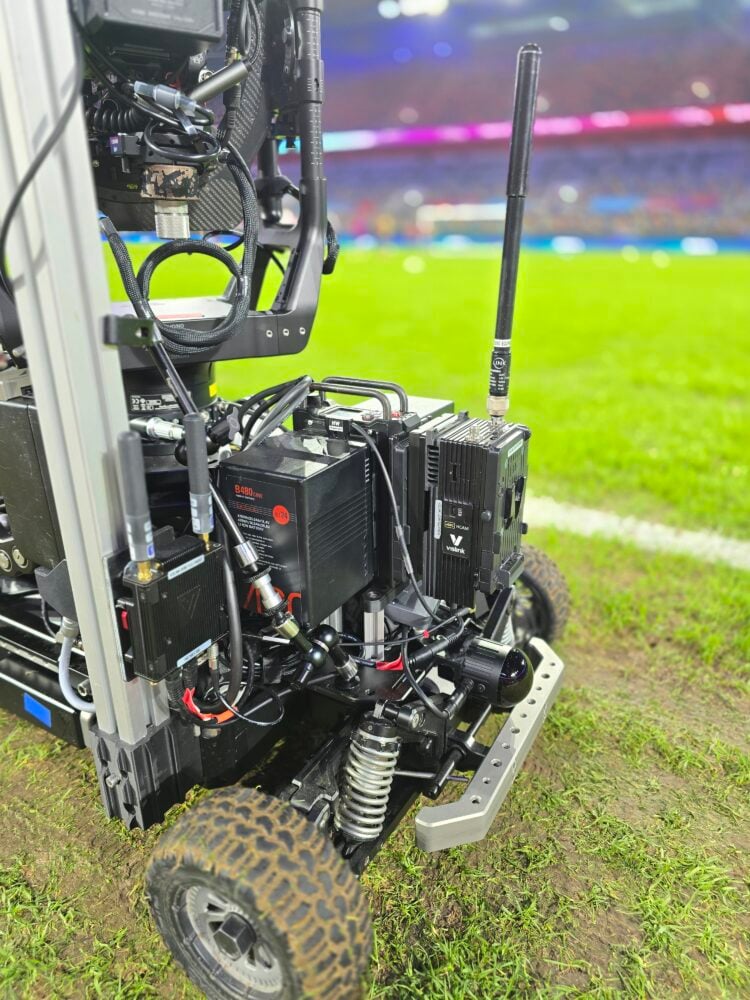
A joint demonstration from Vislink, Motion Impossible, C-Motion, Fujinon and FoMa, featuring RED cameras, provided a practical example of this shift. Rather than presenting a new end-to-end system to replace existing infrastructure, the focus was on how modular components can be combined into purpose-built workflows and integrated alongside existing camera chains, RF systems and production infrastructure.
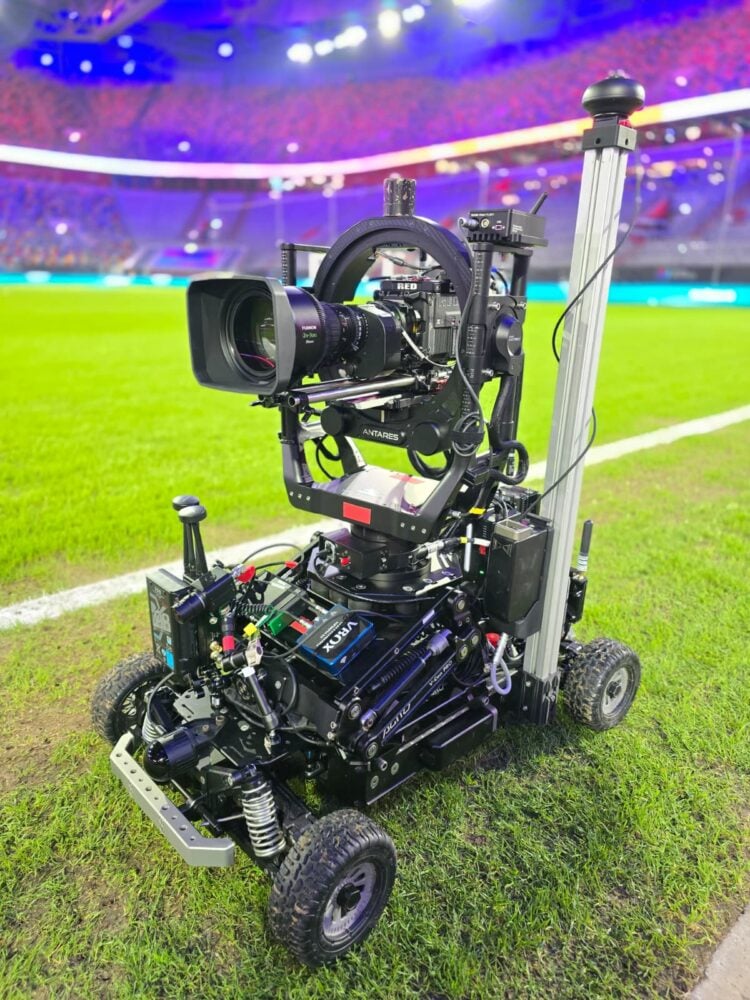
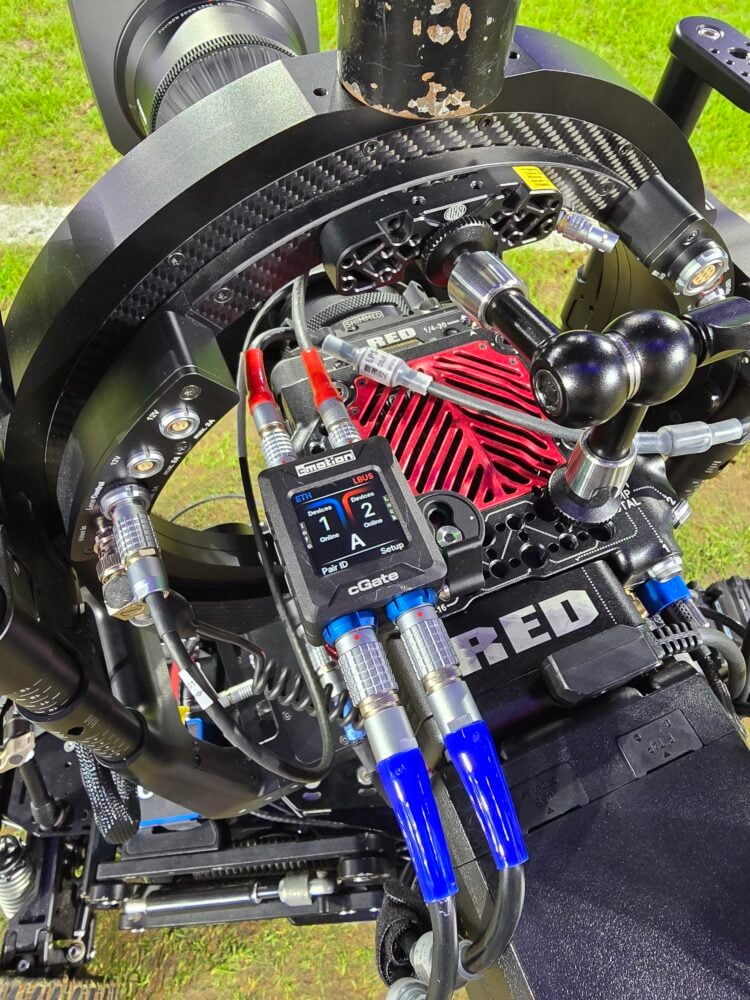
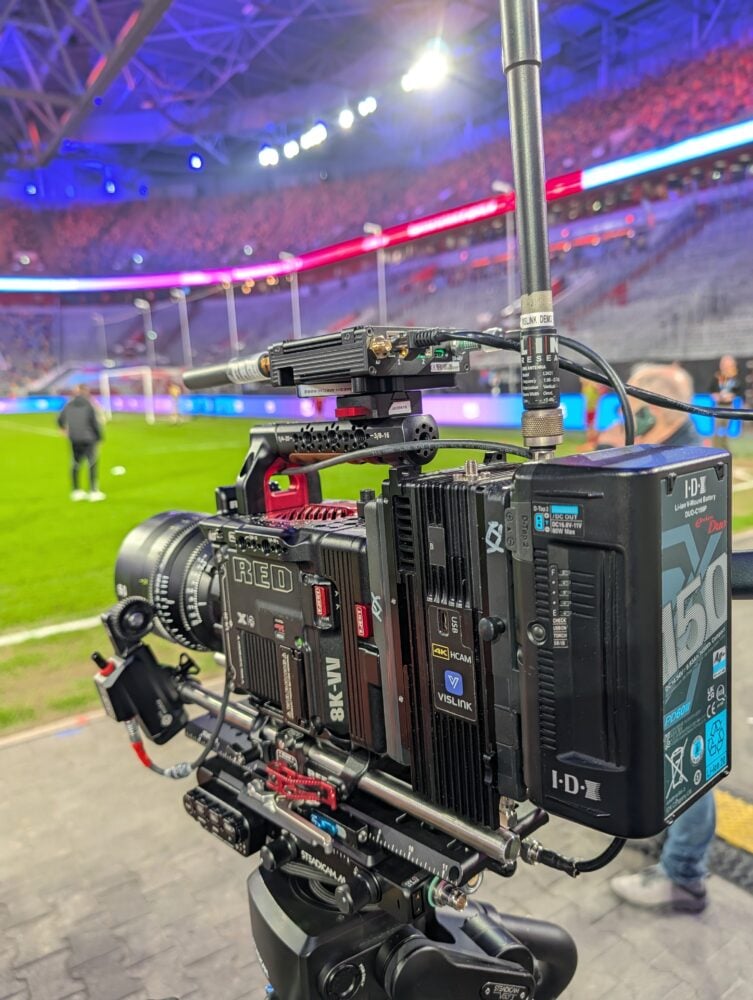
The demonstration centred on a fully integrated, camera system, with each element selected to perform a defined role within the overall workflow:
- Agito Sports (Motion Impossible): A robotic platform enabling controlled, repeatable camera movement across sidelines and field-level positions
- Antares (FoMa Systems): A stabilised remote head providing precise pan, tilt and roll control, with full lens operation
- RED Cameras: High-resolution capture supporting both cinematic depth of field and traditional broadcast workflows
- Fujinon lens: Professional broadcast lens providing accurate zoom, focus and iris response
- C-Motion Lens and Camera Control Systems: Wireless lens control enabling remote adjustment of focus, iris and zoom from engineering or shading positions
- Vislink HCAM: Low-latency RF transmission designed for mobile and roaming camera platforms
- Vislink MeshConnect: Automated coordination and management of RF links, with centralised control to reduce manual intervention and improve multi-camera system management
- Vislink Quantum: Centralised decoding, routing and integration into OB, REMI or IP-based production workflows
Individually, these systems are well established. The demonstration highlights how they can be combined into a coherent workflow, demonstrating an intelligent, software-guided approach to camera movement that enhances repeatability, safety and creative control.
Modularity Driving Flexible Worfklows
The combined workflow is not intended to replace existing broadcast infrastructure. Instead, it shows how modular elements can be introduced into established environments to extend capability where needed.
For engineering teams, this means:
- Existing workflows and signal paths remain unchanged
- Proven systems continue to handle core coverage
- Additional camera systems can be layered in without redesigning the production
These systems can sit alongside traditional cabled cameras, fixed RF links and established receive infrastructure, adding mobility and new shot positions without impacting core operations.
No two venues or productions are identical. RF conditions, camera density and production requirements vary significantly. A modular approach allows teams to adjust deployment based on available spectrum, camera positions and movement requirements and the existing RF, fibre or IP workflows.
This ensures the system can be configured for the specific environment, rather than forcing a fixed approach.
MeshConnect: Centralised Control for Complex RF Environments
Within this workflow, MeshConnect provides a centralised layer of control across multiple wireless camera systems. By automating RF coordination and enabling remote monitoring and adjustment of links and camera parameters, it reduces the need for manual intervention on site.
This reduces setup and frequency planning time and limits the need for ongoing adjustments during operation. It provides engineers with greater visibility across active links, making it easier to maintain stability and respond to changing RF conditions. The result is a more efficient way to manage wireless camera systems, with improved reliability under real-world production constraints.
From Components to Workflow
The showcase demonstrated that value is created at the workflow level, by combining the qualities of already proven broadcast products. The showcase setup, which can scale across multiple camera points:
- Motion systems generate dynamic shots
- Stabilisation ensures those shots remain usable at broadcast quality
- Lens control systems maintain consistent focus, iris and zoom
- Wireless transmitters deliver high quality footage in real time
- Network management maintains link stability and coordination
- Central receive platforms integrate feeds into production
The result is a continuous capture-to-production chain that reduces reliance on fixed infrastructure in key areas, while remaining scalable and adaptable to different production environments.
A Practical Step Forward for Live Sports Production
For many broadcasters, this is not a future concept – it is a practical evolution of workflows already in use globally, but with practical enhancements designed to benefits broadcast teams.
By combining robotic movement, stabilisation, high-end capture and wireless delivery, production teams can introduce additional camera positions and dynamic movement without changing the underlying production architecture.
From an engineering perspective, the value lies in controlled deployment. Systems can be added where required, and camera chains scaled according to event requirements, with straightforward integration into existing RF, fibre and IP workflows.